Grout Band Chemistry at work
Diaper TYPES
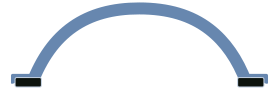

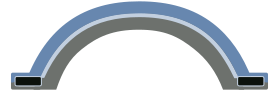
Under most conditions, portland cement is alkaline (pH of about 12.5). Commonly, due to the presence of calcium hydroxide, a passivating iron-oxide film will form on the steel joint, resulting in almost complete corrosion inhibition.
Grout Diapers protect against leaching, which reduces the pH in the cement grout surrounding the joint steel, while simultaneously resisting the intrusion of salts, chlorides, acids, and sulfates that can affect the inhibitive properties of the grout. Grout Diapers also isolate the protective grout from aggressive soils that correlate with highly corrosive electrical current.
Features & Benefits
- Protects against leaching, which leads to reduction of pH in the joint grout cement.
- Defends against intrusion of salts, chlorides, acids and sulfates that can affect the inhibitive properties of the joint grout cement.
- Guards the protective joint grout cement from aggressive soils that can cause high corrosive electrical current.
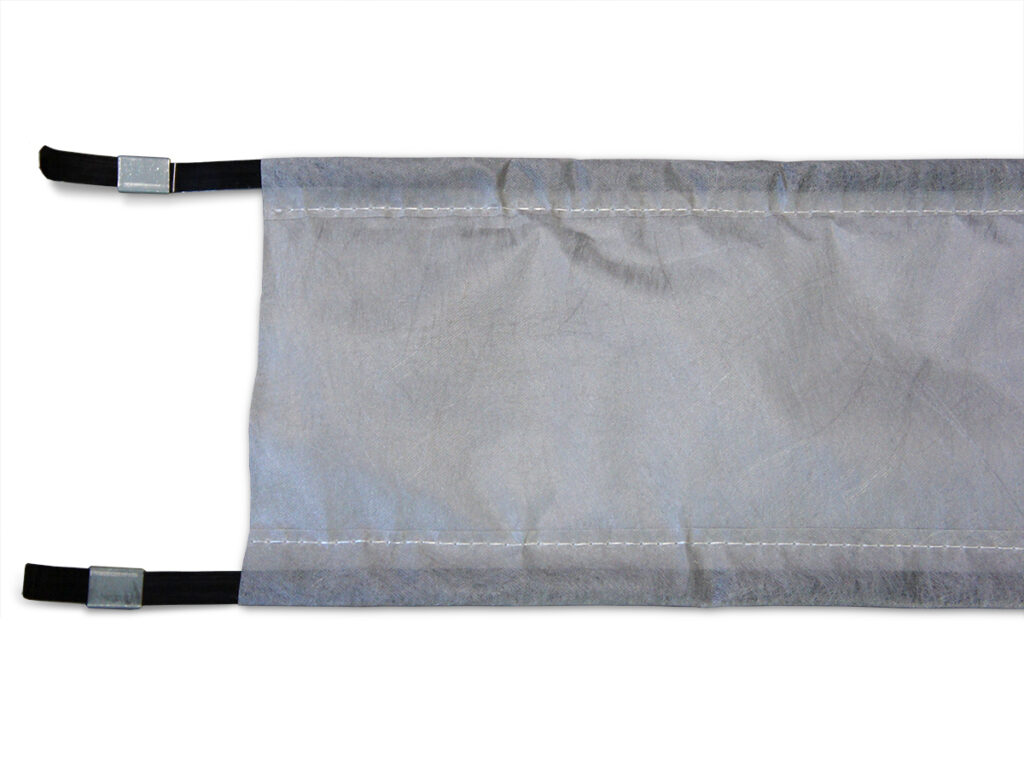
STANDARD Grout Diaper
Typar® Cement Mold
MarMacʼs Standard Grout Diaper provides the best method of applying Portland cement grout into pipe joints. When mixed to a freely pouring consistency, the Portland cement grout penetrates into every opening of the joint. Because it bonds to and becomes part of the pipe itself, it is the most compatible material that can be used to seal concrete pipe joints.
Standard Grout Diapers are manufactured with Typar®; a tough, non-woven material made of polypropylene fibers. This durable, mildew-proof fabric stands up to almost all chemicals and works to add strength to the joint once it is in the ground.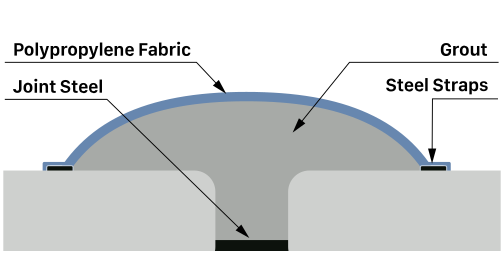
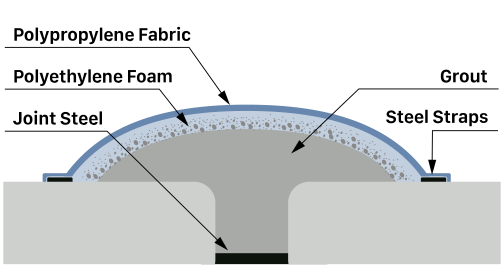
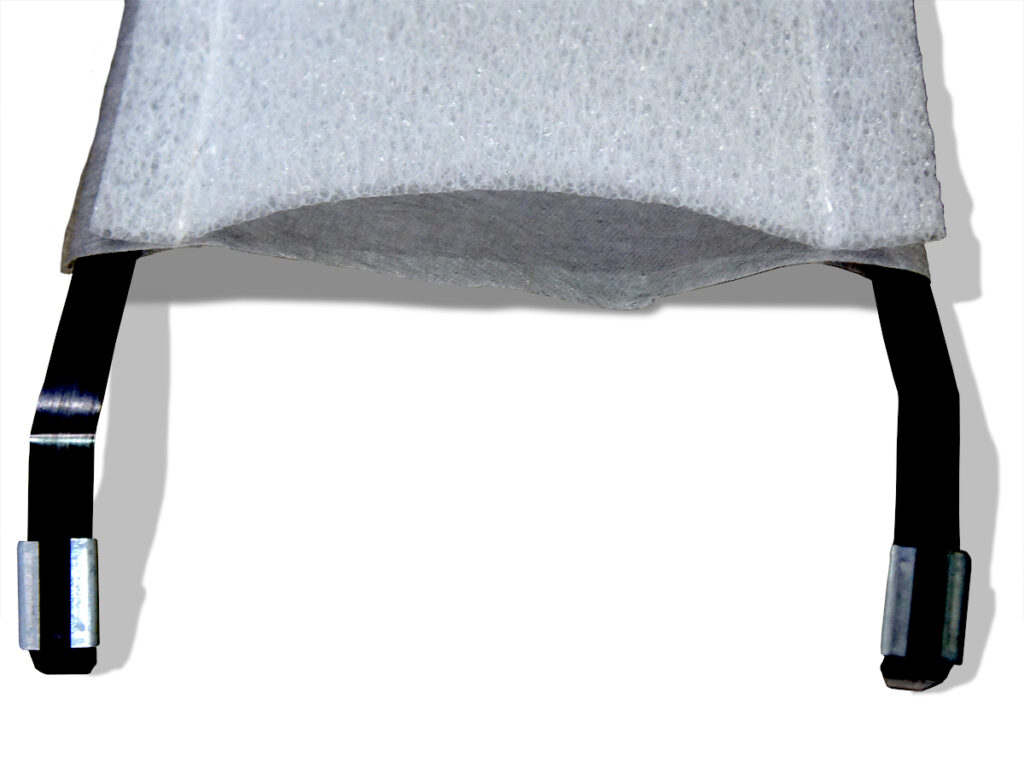
Foam Grout Diaper
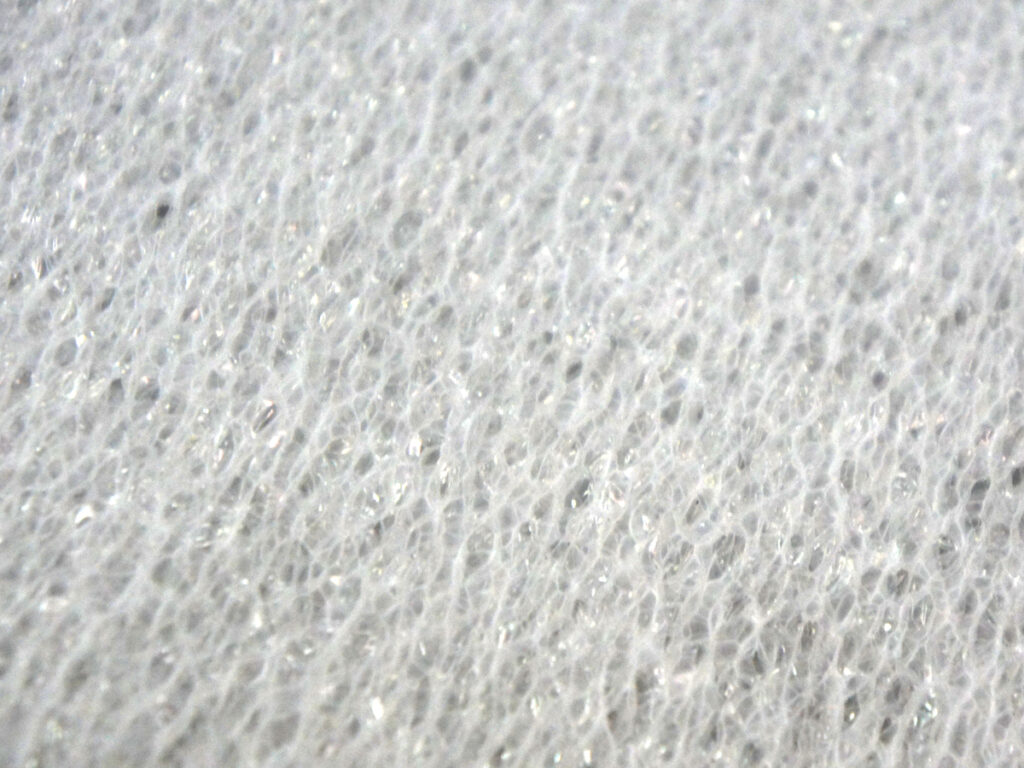
Closed-Cell, Foam-Lined Cement Mold
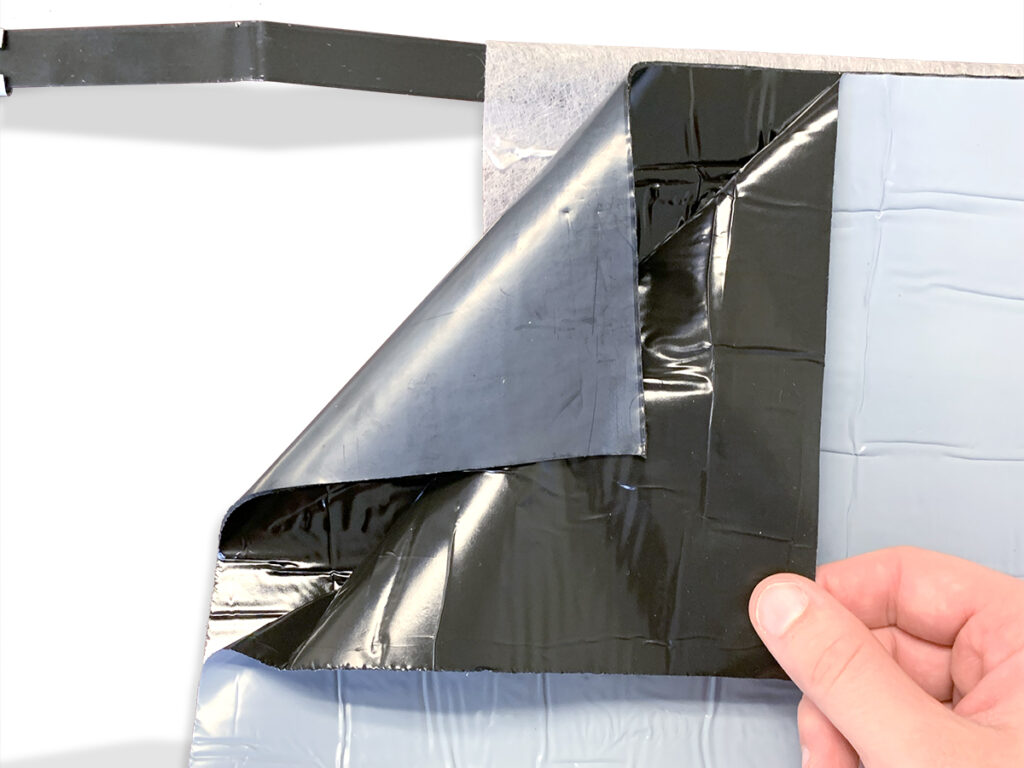
STRETCH-COTE Grout Diaper
Mastic, Moisture-Barrier Cement Mold
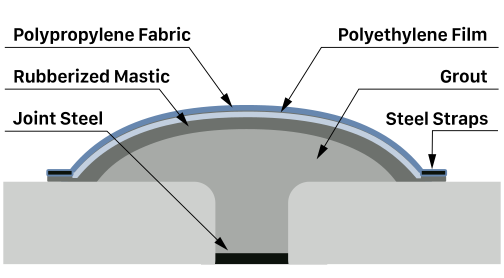
Polypropylene fabric (Typar®) is made with bonded, continuous filaments of polypropylene. It works as an exceptionally strong, dimensionally stable form that molds and holds the weight of the fresh grout. Specialized closed-cell polyethylene foam (Foam Grout Diapers only) is produced according to pipe joint Grout Diaper specifications. This specific foam is resistant to water and most chemicals, including acids, alkalines, and solvents. A thin membrane (0.07”) consisting of layers of polyfilm and rubberized asphalt provide a continuous isolation seal and moisture barrier, protecting the cured grout from exterior elements (Stretch-Cote Grout Diapers only). Steel straps are sewn into the diaper hem to securely tie the diaper to the pipe.
The width of the Grout Diaper will be governed by the width of the joint space and the type of pipe being used. The width should be sufficient to bridge the joint space and be secured to the pipe walls on each side of the joint without failure due to slippage.
The length of the Grout Diaper will be governed by the circumference, with extended tab lengths to accomplish overlapping of the ends once the joint has been filled with grout.
| FABRIC | |
|---|---|
| Material | Non-woven polypropylene |
| Minimum Weight | 3 oz/yd2 |
| STRAPS | |
| Straps | Heat-treated or hot-rolled steel |
| Standard | Class 1, Type I |
| Thickness | ≥ 0.020″ |
| Coating | Waxed or painted/waxed |
| FOAM (Foam Grout Diapers only) | |
| Material | Closed-cell polyethylene |
| Density | 1.9 – 2.2 lbs/ft2 |
| BARRIER MEMBRANE (Stretch-Cote Grout Diapers only) | |
| Material | Polyfilm (0.01″), Rubberized Asphalt (0.06″) |
| Thickness | 0.07″ |
Store Grout Diapers in a dry, cool place.
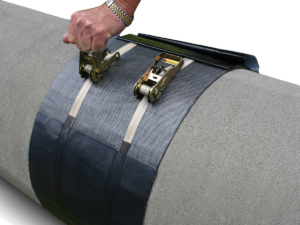
Apply the Grout Diaper around the pipe joint, spanning the joint, with the foam-lined side against the pipe wall. The tab ends of the Grout Diaper extend beyond the strap exit hems. Fold these tabs back, tightening the straps around the pipe and crimping the seals.
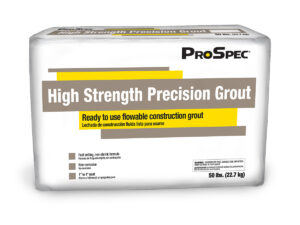
With the tabs folded back, the pouring gap is exposed at the top of the pipe. Pour portland cement grout into the joint recess until the entire joint recess is full. If necessary, use a stiffer grout mix to fill the pouring gap.
When the diaper has been completely filled with grout, fold the tabs back across the filled pouring gap. The tabs should be lapped and pressed tightly into the fresh grout, and sufficient weight (fresh grout recommended) placed on top of the tabs to keep them sealed while backfilling.
VERSIONS
AVAILABILITY
* Refer to version section for widths.
APPLICATIONS
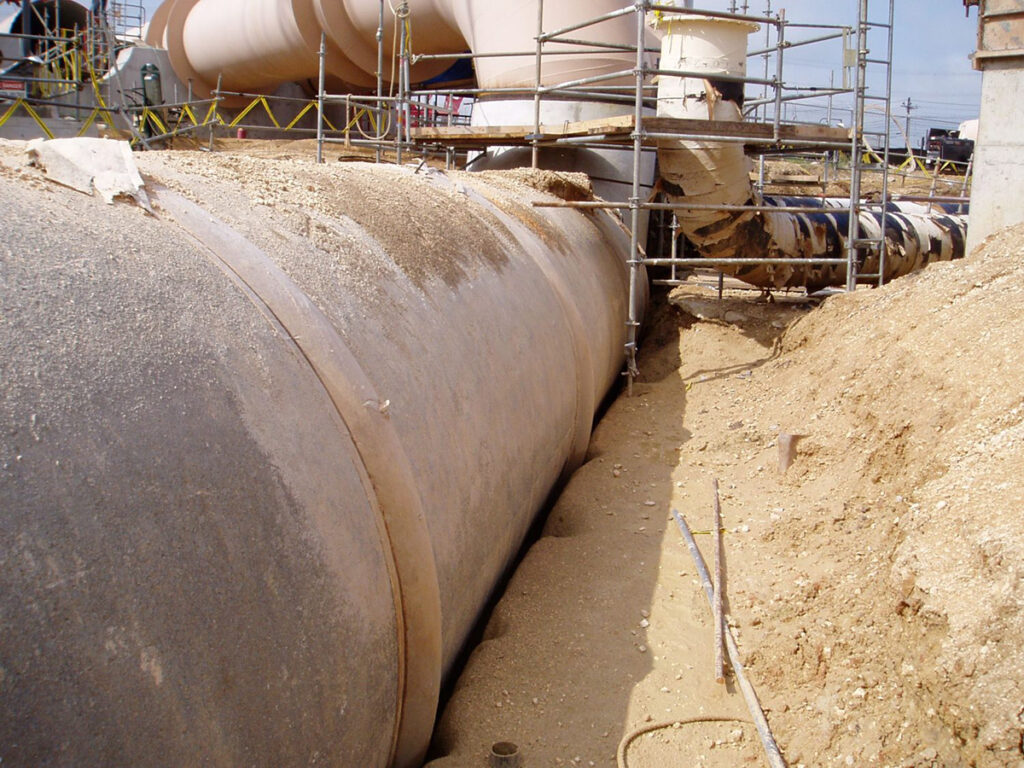
Pressurized Pipe