Microbial-Induced
Corrosion
of concrete infrastructure
Sanitary sewer & stormwater management system failure
is
becoming an increasingly expensive global issue.
The problem
In recent years the American Society of Civil Engineers (ASCE) has given the overall United States sewer system a D+ rating. For generations, much of the country’s hundreds of thousands of miles worth of sewage pipelines have been built of precast concrete. While precast sewer has its benefits and often times is a municipality’s only specified substrate, there is a serious downside to concrete that many are unaware of and the industry has yet to properly address.
Underground infrastructure failure in the United States results in a direct cost of upwards of $15 billion for repair and/or replacement each year*. In addition, indirect costs, or the costs associated with the loss of productivity, service outages, emergency service interventions, and economic impact (not to mention the negative community perception of leadership) are more difficult to calculate, studies show that these account for nearly half of the total.
The primary cause of sewer & stormwater system failure is due to weakened concrete, most commonly the result of Microbial-Induced Corrosion – or MIC. Unprotected concrete infrastructure, especially in sanitary sewage systems, are highly prone to the negative effects of MIC. While unplanned sewer repair or replacement costs continue, municipalities are frantically searching for a solution to MIC, and due to the complexity of the problem, the industry has yet to find a satisfactory remedy.
* According to data taken from a 2017 cost benefit analysis engineering study, and adjusted for modern day inflation.
What is MIC?
As the unabbreviated term suggests, Microbial-Induced Corrosion is the premature deterioration & disintegration of concrete by microorganisms including bacteria & fungi.
MIC is a result of the interaction between concrete infrastructure and the underground environment to which it is exposed. The combination of gases, humidity, and temperature, especially in sanitary sewer systems, is the perfect breeding ground for a specific type of microorganism that is detrimental to concrete and the primary culprit of MIC.
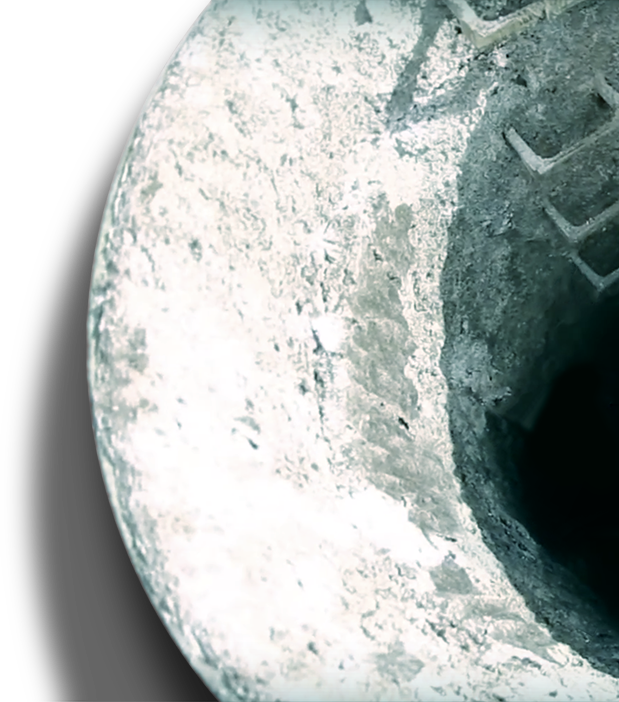
Wastewater and sewage release a high level of hydrogen sulfide gas, the preferred food of thiobacillus bacteria, resulting in thriving colonies of these pernicious organisms in untreated sanitary sewer systems. In turn, the thiobacillus secrete sulphuric acid which attacks and rapidly lowers the pH of precast pipe, manholes, and culverts, causing corrosion of the cement binder found in the concrete.
Stages of MIC in untreated sewer systems
14 -
-
10 -
-
6 -
-
2 -
▲ -
pH
time ►
Stage 1
Stage 2
Stage 3
Stage I: Fresh concrete
Weak acids slowly lower pH
Stage II: Organism growth
Biofilms accelerate pH drop
Stage III: Corrosion
Low pH rapidly degrades concrete
Stages of MIC in untreated sewer systems
14 -
-
10 -
-
6 -
-
2 -
▲ -
pH
time ►
Stage 1
Stage 2
Stage 3
Stage I: Fresh concrete
Weak acids slowly lower pH
Stage II: Organism growth
Biofilms accelerate pH drop
Stage III: Corrosion
Low pH rapidly degrades concrete
Stages of MIC in untreated sewer systems
14 -
-
10 -
-
6 -
-
2 -
▲ -
pH
time ►
Stage 1
Stage 2
Stage 3
Stage I: Fresh concrete
Weak acids slowly lower pH
Stage II: Organism growth
Biofilms accelerate pH drop
Stage III: Corrosion
Low pH rapidly degrades concrete
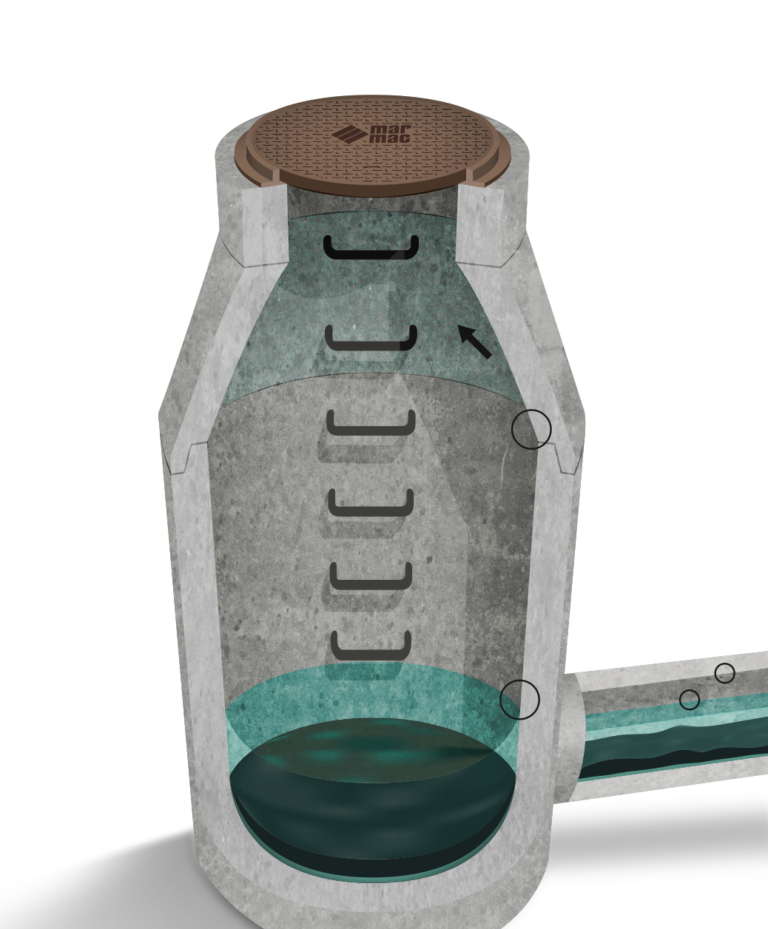
Effects of MIC in untreated
sewer systems
Concrete manhole / pipe
Wastewater
Sludge accumulation
Slime layer
Condensation
Points of high corrosion
Proper MIC defense relies on preventing bacteria from thriving.
Traditional Remedies
Thicker concrete
Increased wall thickness to make the
structure more durable to acid attack.
More reinforcement
The use of reinforcement additives such
as fibers or fillers to increase strength.
Denser concrete
The more dense a concrete structure
is, the longer it takes to corrode.
Liners
Application of a protective polymeric coating
barrier to reduce concrete exposure.
In addition to the practices above, the use of alternate materials in stormwater & sanitary sewer construction (e.g. PVC, ductile iron, etc.) is often considered, however, concrete continues to be the most cost-effective option, typically even with the the major MIC challenge. An efficient, cost-effective solution to this issue would make concrete the undisputed preference.
Traditional “remedies” for MIC have historically been incomplete as they often result in cured concrete becoming more susceptible to microbial corrosion. No past solutions have focused on the core issue: The prevention of thiobacillus bacteria.
Those preferring concrete systems will be interested in avoiding unnecessary risk with built-in MIC mitigation.
In partnership with Microban®, MarMac began developing a solution
from the ground up to defend against MIC.
Developing the solution
After extensive analysis of potential solutions for MIC and sewage system failure, we took a prescriptive approach to the three stages of MIC at a progressive level in order to minimize the impact of each stage.
Stage 1 :
Concrete design
Establish a high concrete pH with resistance to neutralization from the start.
Consideration should be given to selecting a concrete mix design with an initial high pH and strong resistance to neutralization. Concrete should not be based solely on its strength or density as protection in Stage 1 since these properties do not protect against pH neutralization. Concrete design mixes emphasizing strength through densification have been found to have a very low initial pH, reducing the inherent stage 1 protection which occurs due to alkalinity.
Concrete with an initial high alkaline significantly delays the first stage of MIC.
Stage 2 :
Antimicrobial
Halt microbial growth before given the opportunity to thrive.
For protection throughout stage 2 of MIC, it is necessary to inhibit bacteria before colonies are given the opportunity to thrive. Enter Microban®, the global leader in antimicrobial solutions. The addition of Microban®’s active ingredient alters concrete by introducing a series of molecular-spikes throughout the treated structure. Negative-charged microbes are drawn to these long, positive-charged spikes, rupturing their cell walls and keeping the concrete free of excess microbial growth & mold buildup. Built-in Microban Antimicrobial Technology™ is permanent and will not wash away or break down over time, resulting in longer-lasting concrete and protection against the harmful effects of thiobacillus bacteria.
Microban® demonstrates efficacy with a more than 90% reduction of thiobacillus.
Stage 3 :
Water & acid resistance
Reduce water & acid infiltration into naturally porous concrete.
During stage 3, the now acidic pH level of the concrete (the result of the first two stages of MIC) attacks the cement binder in the concrete, causing rapid deterioration and ultimate failure. Acid attack operates under aqueous media, or in other words, acid mixed with water is absorbed by porous concrete, allowing the acid to dissolve the cement binder deep within untreated concrete structures.
Any means of reducing, inhibiting or retarding the water in the concrete will reduce acid attack. To achieve this, a buffer is required between the acidic water and concrete in order to increase resistance to any aqueous-based chemical attack. Microban®’s active ingredient repels water due to the long hydrocarbon tail of its active ingredient, hydrophobic properties are introduced in treated concrete.
Microban Antimicrobial Technology™ increases water & acid resistance.
Following this prescriptive approach, we created
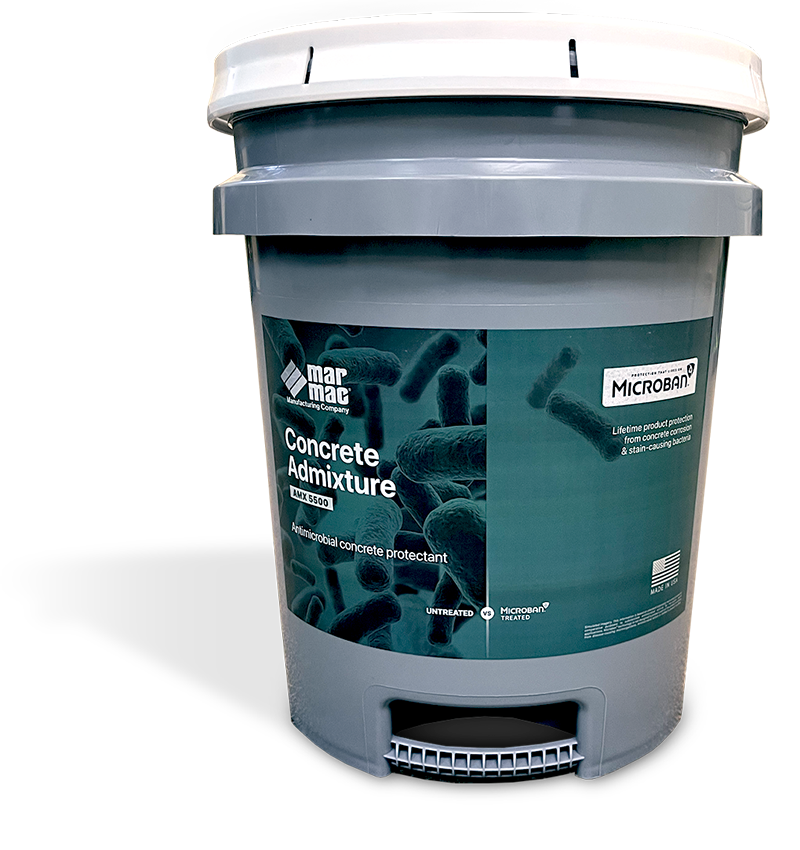
MarMac Antimicrobial Concrete Admixture AMX 5500.
Testing the solution
Without extensive testing both in-house and by multiple highly-regarded third parties, we could make no claims about our theorized admixture remedy.
Beginning in-house, we performed multiple concentrated acid soak tests in order to simulate a sanitary sewer environment over decades of service. The tests were based on the ASTM C1904-20 standard, where failure occurs when a concrete structure has lost 50% of its mass. In each test, two identical concrete pucks were submerged in a concentrated acid solution: one sample treated with MarMac’s AMX 5500, the other was left untreated. A third identical, untreated sample was left unexposed and served as the control. The results were as follows…
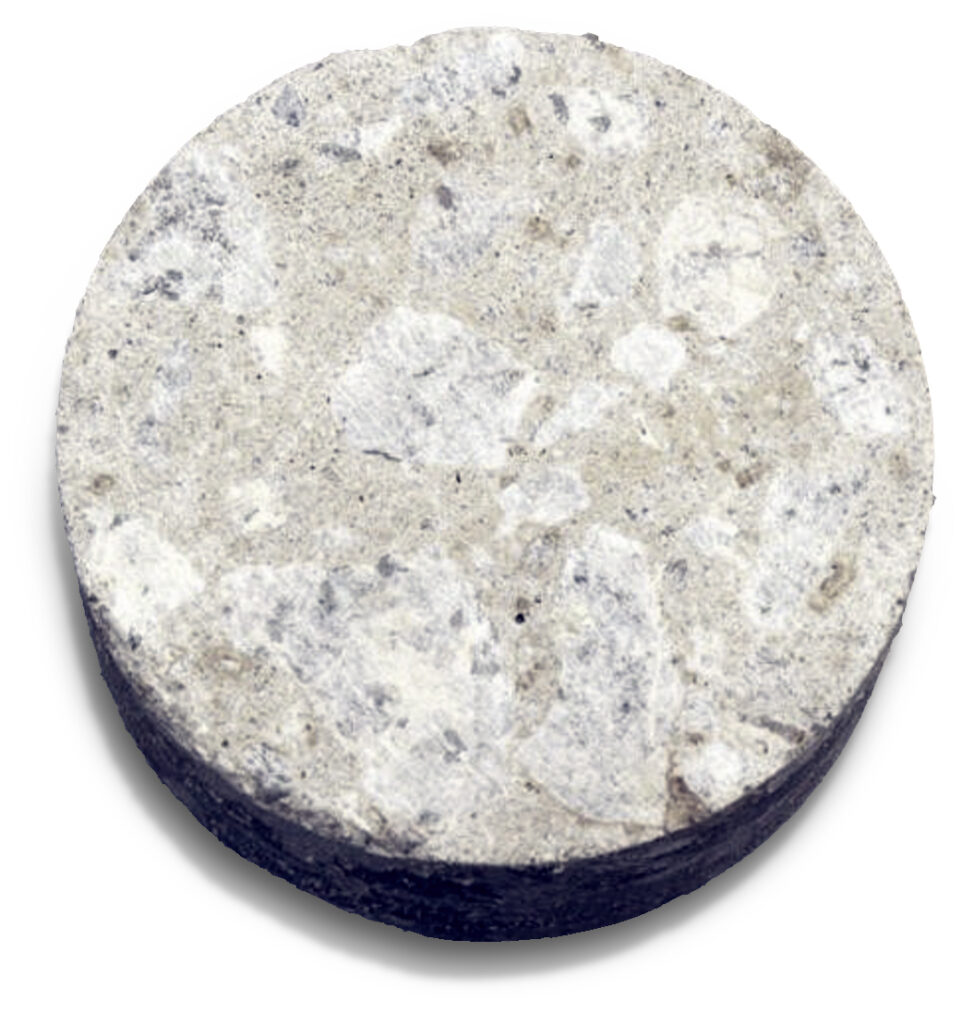
WEEK 4 OF ACID SOAK
Treated samples showed noticeable water/acid resistance
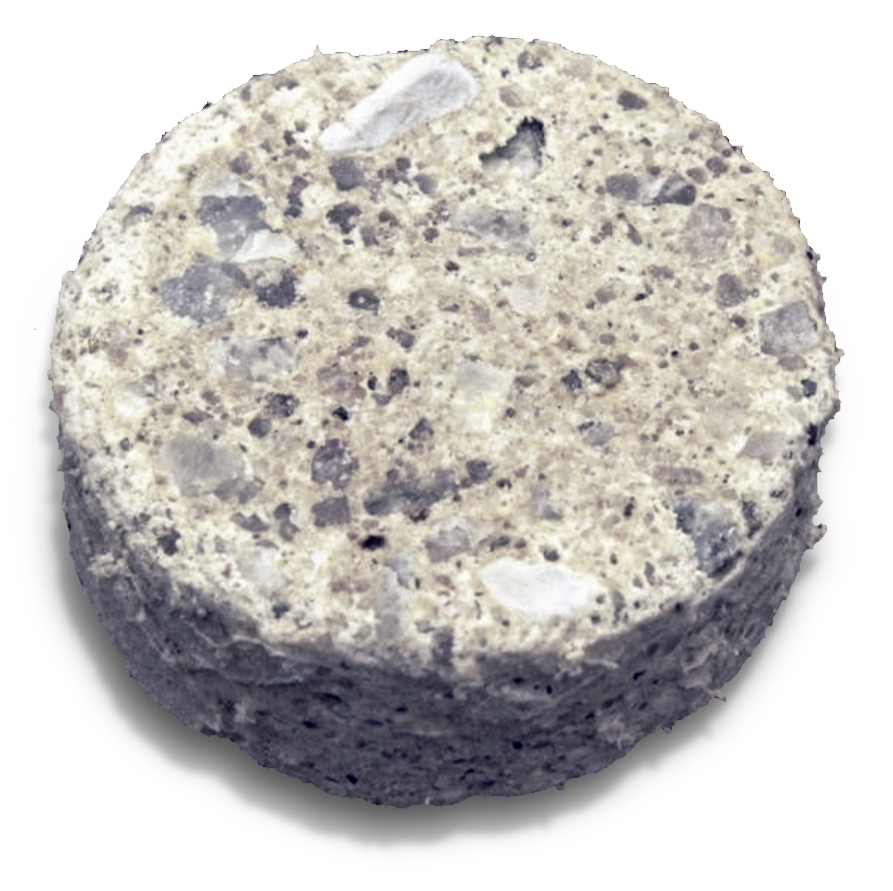
MarMac-treated samples lost
< 5% of mass
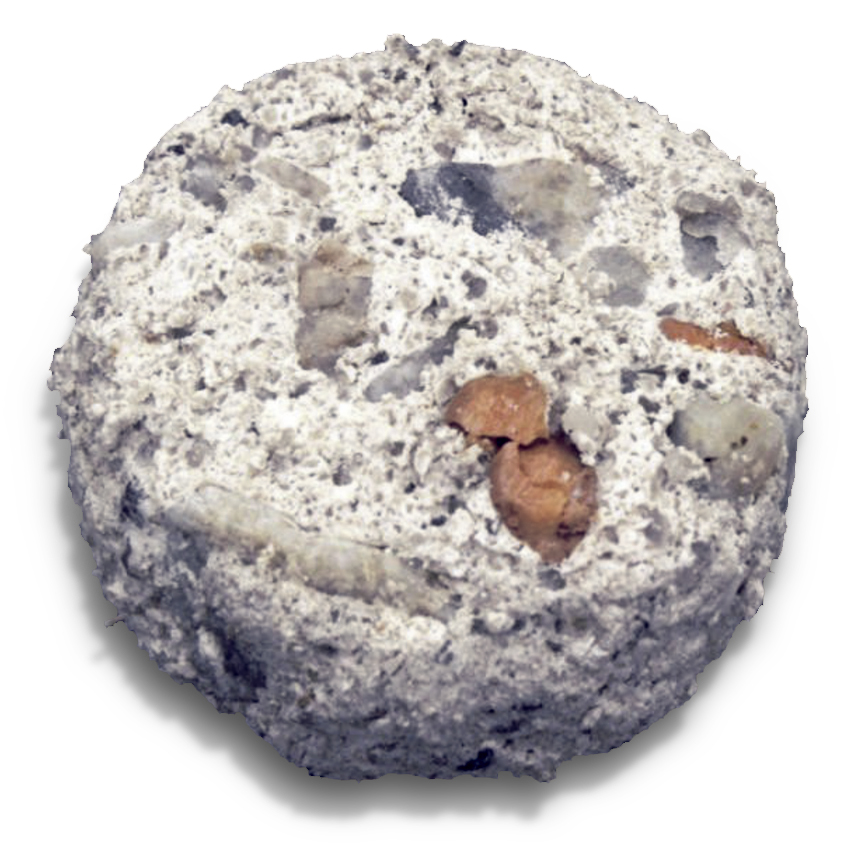
Untreated samples lost
> 15% of mass
WEEK 17 OF ACID SOAK
Untreated sample near failure point
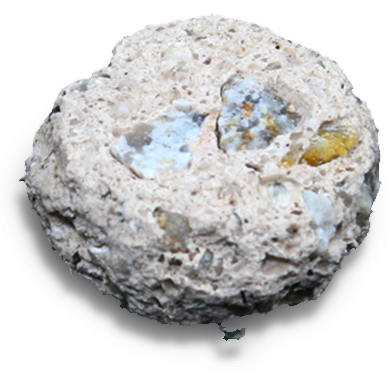
Total Mass Loss = 8.5%
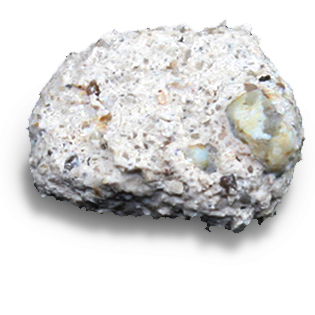
Total Mass Loss = 47.6%
ANALYSIS OF TEST RESULTS
Verified extension of concrete lifespan
| SAMPLE | SLOPE (rate) | FAILURE |
|---|---|---|
Untreated |
-0.0051 |
98 days |
Treated |
-0.0006 |
833 days |
The final test results indicated a considerable performance improvement where MarMac-treated concrete will not reach 50% mass loss in this acid test for well over two years, which is over 8.5 times longer than the untreated sample.
Interpretation OF TEST RESULTS
Data-backed model of real world application
| MIC PHASE | UNTREATED MANHOLE | TREATED MANHOLE |
|---|---|---|
Stage 1 |
10 years |
> 20 years |
Stage 2 |
10 years |
> 30 years |
Stage 3 |
5 years |
> 42 years |
TOTAL SERVICEABLE LIFE |
25 YEARS |
> 92 YEARS |
CONCLUSION: Proper use of MarMac’s AMX 5500 can double the benefits of stage 1 of MIC, triple duration of stage 2, and extend stage 3 by more than 8 times over…
providing a treated sanitary sewer manhole or pipe with a 90+ YEAR service life.
Third party Testing
Following MarMac’s highly-successful in-house testing results, AMX 5500 was sent off for rigorous testing by independent microbiological laboratories for its efficacy against MIC.
OSU College of Engineering
ASTM C1904-20 test
Oregon State University’s College of Engineering tested MarMac’s AMX 5500 against standard lab test ASTM C1904-20: Determination of Effects of Biological Acidification on Concrete Antimicrobial Additives. Below is a summarization of their results…

Change in pH of bacterial media
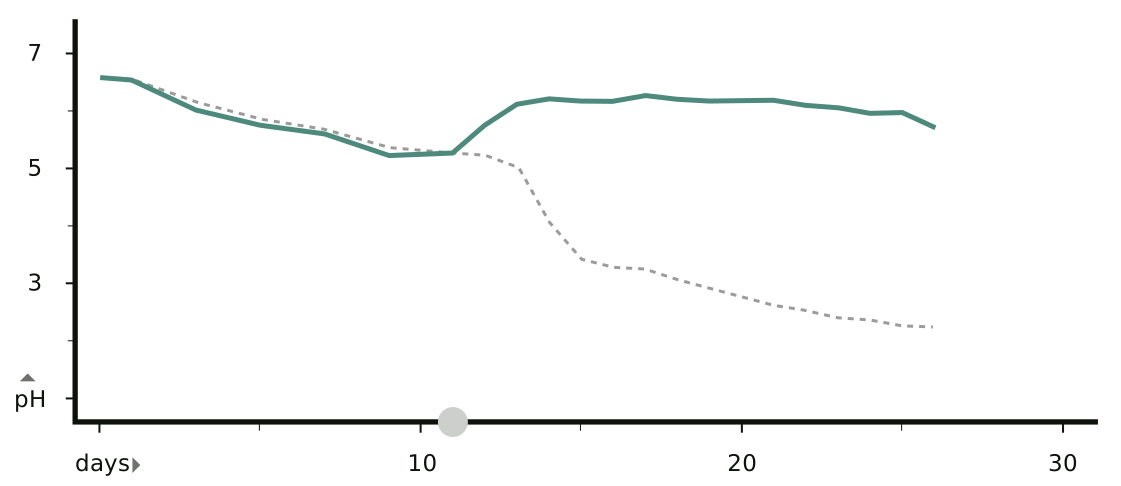
AMX 5500-treated
Untreated
AMX addition
“… [The AMX 5500] additive is extremely effective at reducing the strength loss of the cement due to MIC.”
EMSL Analytical, Inc.
ISO 22196:2011 (JIS Z2801) test
EMSL Analytical tested MarMac’s AMX 5500 against standard lab test ISO 22196:2011 (JIS Z2801): Antibacterial Efficacy Testing of Construction Materials. The summarization of their results was…

“… [AMX 5500] exhibited a microbial “kill” of > 99.999% after 24hrs exposure.”

Concrete
Admixure
AMX 5500
Antimicrobial concrete protectant

Ready to use AMX 5500 in your project?